
Ranks in Pakistan Army
The hierarchy of the Pakistan Army is structured to ensure a smooth chain of command, discipline, and operational effectiveness. Each rank reflects specific responsibilities, authority, and duties, forming a clear progression from entry-level soldiers to high-ranking officers. Below is a detailed breakdown of the organizational structure of the Pakistan Army
Commissioned Officer Ranks
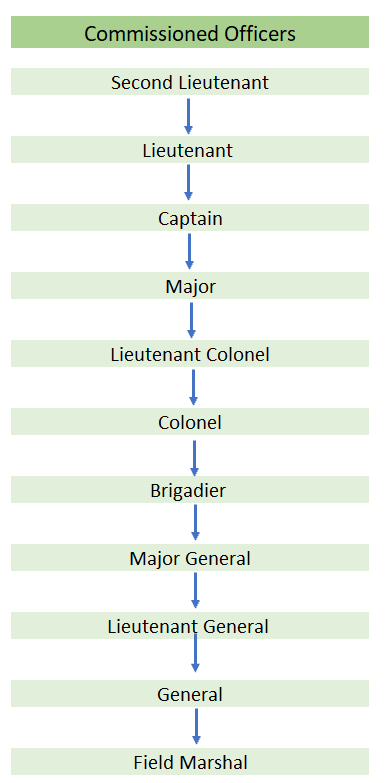
Commissioned officers hold leadership positions and are responsible for commanding troops and making strategic decisions. The ranks, from highest to lowest, are
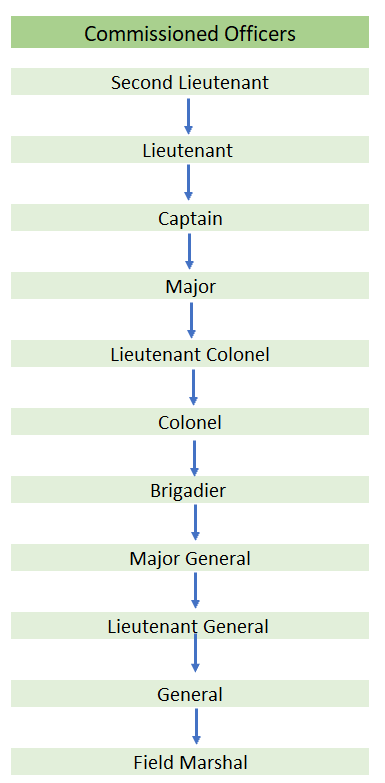
Second Lieutenant (سیکنڈ لیفٹیننٹ) – The entry-level rank for commissioned officers, responsible for leading small units.
Lieutenant (لیفٹیننٹ) – Leads platoons or specialized units.
Captain (کیپٹن) – Leads company-sized units or specialized teams.
Major (میجر) – Often functions as a staff officer or second-in-command at the battalion level.
Lieutenant Colonel (لیفٹیننٹ کرنل) – Commands a battalion or serves in staff roles.
Major General (میجر جنرل) – Commands divisions or holds senior staff roles.
Colonel (کرنل) – Typically serves as a commanding officer of a regiment or battalion.
Brigadier (بریگیڈیئر) – Commands a brigade or serves in senior staff appointments.
Lieutenant General (لیفٹیننٹ جنرل) – Senior officers commanding corps or holding key staff positions.
General (جنرل) – The highest active rank, typically held by the Chief of Army Staff.
Field Marshal (فیلڈ مارشل) – This is an honorary rank and has been awarded only once in Pakistan’s history.
Junior Commissioned Officers
Junior Commissioned Officers (JCOs) serve as a critical link between the commissioned officers and the enlisted personnel. They are responsible for executing orders from commissioned officers and ensuring that enlisted soldiers are properly managed. Here are the primary JCO ranks
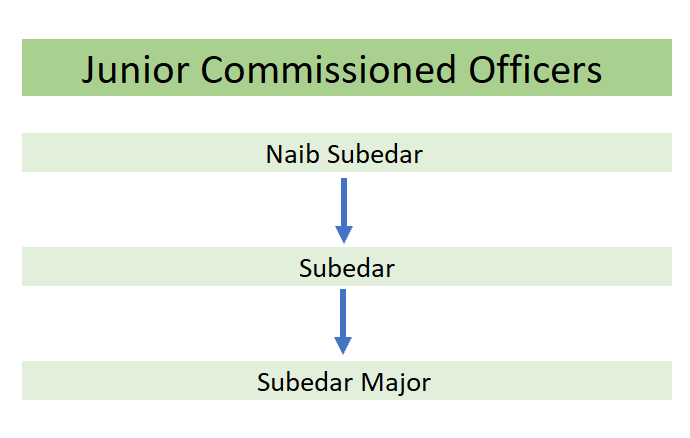
Naib Subedar (نائب صوبیدار)
The Naib Subedar is a junior-ranking JCO who plays a crucial role in managing enlisted personnel and assisting senior officers. They often oversee smaller groups of soldiers and are responsible for ensuring that their subordinates follow orders, maintain discipline, and perform their duties effectively.
Subedar (صوبیدار)
A Subedar holds a significant leadership role within the unit, typically commanding a company or platoon. They act as key intermediaries in the execution of tasks and maintain operational readiness. Subedars often have many years of experience and serve as mentors to lower-ranked soldiers.
Subedar Major (صوبیدار میجر)
The Subedar Major is the senior-most JCO in the military. This position is highly respected, and the Subedar Major has the responsibility of overseeing all JCOs in a unit. They also serve as the chief advisor to the commanding officer, ensuring smooth communication and discipline between the commissioned officers and enlisted ranks.
Non-Commissioned Officers
Non-Commissioned Officers (NCOs) are responsible for maintaining discipline, enforcing regulations, and ensuring that operational tasks are carried out effectively. They are typically more hands-on with soldiers and have direct involvement in daily military activities. Below are the key NCO ranks
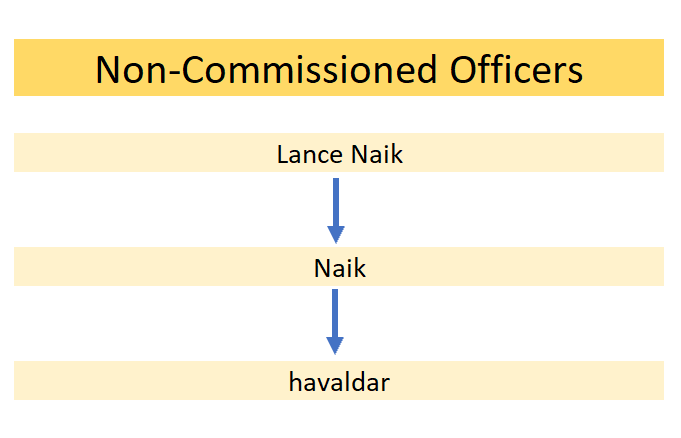
Lance Naik (لانس نائیک)
The Lance Naik is a junior NCO rank. Although this position has less authority than that of a Naik, Lance Naiks are tasked with assisting in the execution of orders, managing day-to-day tasks, and ensuring discipline among enlisted personnel.
Naik (نائیک)
A Naik holds the rank just below a Havildar and plays a vital role in the leadership of smaller units. Naiks are responsible for assisting the Havildar in managing soldiers and often act as a liaison between junior soldiers and senior NCOs or JCOs.
Havildar (حوالدار)
The Havildar is one of the most important NCOs. They have a broad range of responsibilities, including overseeing the welfare, discipline, and training of lower-ranked soldiers. A Havildar typically supervises a squad or a section and ensures that tasks are completed efficiently and effectively.
Enlisted Ranks
Enlisted personnel are the backbone of the military and form the foundation of the military structure. These soldiers, although they may not hold any leadership positions, play an essential role in executing the tasks assigned to them.
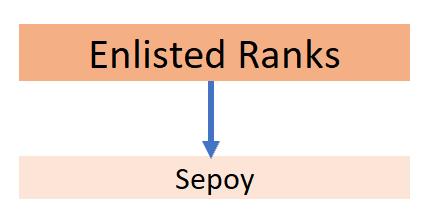
Sepoy (سپاہی)
The Sepoy is the entry-level rank in the military. Sepoys are responsible for carrying out a variety of operational tasks and duties as instructed by their superiors. They form the primary workforce in the military and are crucial for maintaining the functioning of a unit.
Cavalry-Specific Ranks
In the armored corps, specialized cavalry ranks are used to identify soldiers who serve in these specialized units, such as tank crews and other armored vehicles. These ranks have unique responsibilities and roles within the corps.
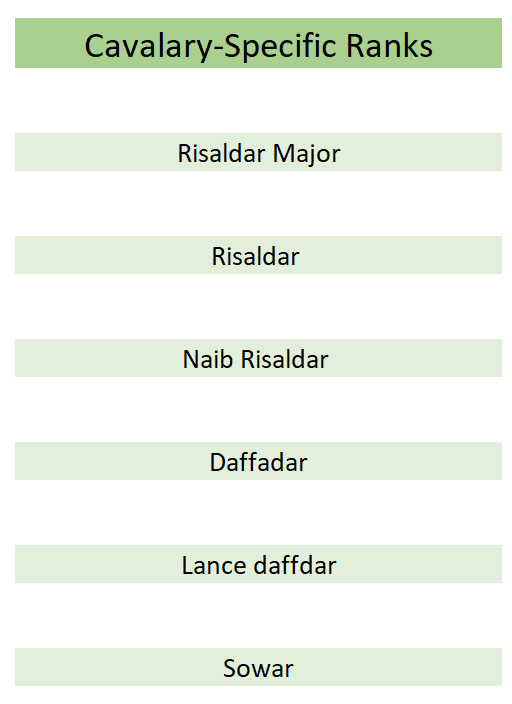
Risaldar Major
The Risaldar Major is the senior-most officer in the cavalry and armored units. They hold similar responsibilities to the Subedar Major but specifically within the cavalry division. They oversee the operational readiness and discipline of cavalry units.
Risaldar
A Risaldar is a senior officer in the cavalry, tasked with managing cavalry troops. They work alongside the Risaldar Major and supervise the training and activities of lower ranks in armored units.
Naib Risaldar
The Naib Risaldar assists the Risaldar in managing the cavalry unit. This position is crucial for ensuring the smooth functioning of the armored corps and the welfare of soldiers under their command.
Daffadar
A Daffadar is a junior officer in the cavalry, typically in charge of managing smaller groups of soldiers. They have a role similar to a Havildar but in a specialized cavalry context.
Lance Daffadar
The Lance Daffadar holds a rank just below the Daffadar and plays a supporting role in managing smaller cavalry units. They provide direct oversight of soldiers and assist in the coordination of cavalry operations.
Sowar
The Sowar is an entry-level rank in the cavalry, similar to the Sepoy in other branches. They serve as the foundation of the cavalry unit, riding and operating armored vehicles to carry out specialized tasks in the field.
Organizational Hierarchy
The Pakistan Army’s structure is divided into operational and administrative components
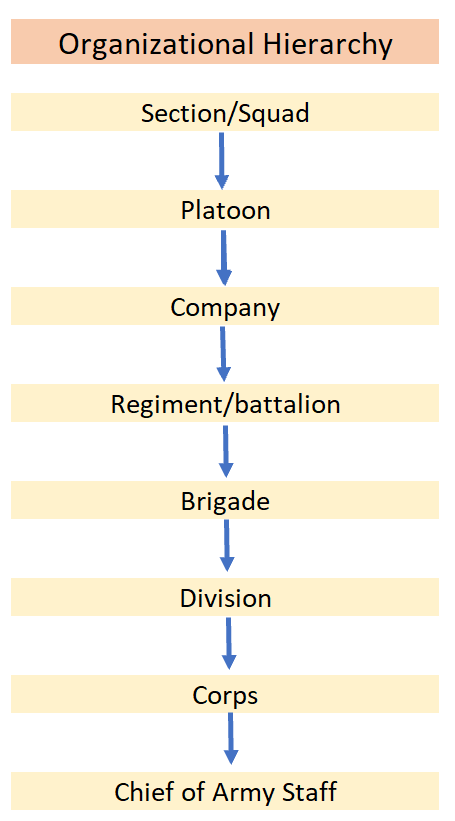
Section/Squad: The smallest unit, often led by NCOs
Platoon: Led by Lieutenants or Second Lieutenants.
Company: Commanded by Majors or Captains.
Regiment/Battalion: Led by Colonels or Lieutenant Colonels; these are the basic combat units.
Brigade: A tactical unit under a Brigadier’s command.
Division: Composed of several brigades, led by a Major General.
Corps: The largest operational units, each commanded by a Lieutenant General.
Chief of Army Staff: The highest commanding authority under the President of Pakistan, who serves as the supreme commander.
This hierarchical structure ensures effective command and control across all levels of the Pakistan Army, enabling it to function efficiently in both peace and wartime scenarios